Ongoing Research on Extractive Industries
Backward Linkages in the Copper Mining Sector in Zambia. Joint with Paula Fernandez Musso, with the support from International Growth Centre (IGC). (Unpublished. Please contact the authors for a preliminary draft.)
Abstract: Critical mineral mining presents a strategic opportunity for low- and middle-income countries to foster domestic firm growth through spillovers. Yet, the enclave theory of mining posits that extractive industries generate weak or non-existent backward linkages to the host economy, relying instead on imports. Departing from the aggregate national accounts typically used in the literature, we test this claim by constructing a novel firm-to-firm transaction database of more than 21 million observations covering the universe of VAT-reporting firms in Zambia and their imports, and link it to monthly mine-level copper production. Copper production is positively associated with backward linkages (elasticity of 0.516), driven by both the intensive margin (average value per transaction) and the extensive margin (number of transactions). On average, mines under Chinese ownership generate significantly fewer domestic linkages. Turning to imports, the elasticity is lower: 1% increase in copper production is associated with a 0.18% increase in import value, and has a lower base value. Leveraging Zambia’s price-taker status, we instrument local copper production with the international copper price. Exogenous short-term increases in production spur both domestic procurement and imports, primarily through more numerous but smaller transactions. Upstream firms (“mine suppliers”) also expand their own domestic and international procurement when copper production rises, highlighting the spread within the firm networks. We conclude that the aggregate demand in the Zambian economy fluctuates with monthly international copper prices and domestic production volumes, challenging the enclave theory, though the sufficiency of these linkages remains uncertain.
Blog post: International Growth Centre
Extent of Toxic Metals Exposure and Associated Health Effects in Copperbelt Communities in Zambia: A Systematic Review
Titus R. Leeyio, Elias C. Nyanza, Paula Fernandez Musso, Obrian Ndhlovu, Anja Benshaul-Tolonen
Abstract: Zambia’s century-long copper mining has underpinned economic growth but generated persistent toxic-metal pollution across the Copper belt and Kabwe regions. Lead (Pb), cadmium (Cd), copper (Cu), mercury (Hg), arsenic (As), and cobalt (Co) contaminate soil, water, and food crops, posing major public-health risks. Although numerous studies have documented environmental contamination, no comprehensive synthesis of exposure pathways and health effects has been conducted. We therefore aimed to systematically review and synthesize evidence from 2010–2025 on toxic-metal contamination and associated health risks among populations living in or near Zambia’s copper-mining areas. Following PRISMA guidelines, PubMed, Cochrane, Google Scholar were searched for peer-reviewed and grey literature. From the search databases, eleven studies quantifying exposure to Pb, Cd, Cu, Hg, As, Ni, Zn, or Co were eligible. Data were extracted on study design, sample media, analytical methods, exposure levels, and risk estimates. Study quality was appraised using the adapted Newcastle–Ottawa Scale (NOS). The ten studies, covered major mining centers of Kitwe, Mufulira, Chingola, Chambishi, Ndola. Soils showed the highest contamination, with Cu, Pb, and Cd exceeding WHO and Zambia Environmental Management Agency limits within 2–5 km of smelters and tailings. Groundwater Pb levels in Kabwe reached 0.131 mg/L, over ten times the WHO guideline (0.01 mg/L). Food-crop analyses revealed significant bioaccumulation of Pb, Cd, Cu, and Zn, confirming dietary exposure. Non-carcinogenic hazard quotients were common for Pb and Cd, especially in children, while carcinogenic risks (TCR) for Cd and Ni were at or above USEPA thresholds. Mechanistic evidence implicated oxidative stress, enzyme inhibition, mitochondrial dysfunction, and DNA damage as key toxicity pathways. Toxic-metal contamination around Zambia’s copper mines remains extensive, with soils, water, and food representing chronic exposure routes. Children face disproportionate health risks from Pb and Cd. Despite localized remediation efforts, national monitoring and exposure surveillance remain limited. Strengthened regulatory oversight, spatial mapping, and remediation of contaminated sites are urgently required to protect public health and ensure sustainable mining practices in Zambia.
African Mining Economies and the Gender Gap in Political Participation (with Maty Konte and Beatrice Gibertini). (2024)
Abstract: There is a significant gender gap in political participation in Africa. At the same time, many African economies are heavily dependent on extractive industries, which have
been traditionally male dominated. We investigate whether mining activities influence
the gender gap in political participation at the local level. To do so, we use Afrobarom-
eter data for over 120,000 respondents merged with precise geo-located information on
mining sites. The main empirical strategy relies on difference-in-difference estimation,
using both geographic variation and variation in mining activities. We explore five
dimensions of political participation, including discussing politics, voting, attending
community meetings, accepting women as leaders and protesting. The results show
that in proximity of active deposits, the gap in political participation narrows between
women and men, driven by women near active deposits being more politically active
than those living further away. However, no significant effect is found for participation
in protests, especially in conflict-prone settings. In an alternative, strictly exogenous
method, predicted changes in mining activities driven by mineral prices yield compa-
rable results. We explore several mechanisms and show that employment is one of the
main channels explaining changes in women’s political involvement.
Published Research on Extractive Industries
Mine Suppliers: Understanding backward linkages in Kitwe, Zambia. Joint with Paula Fernandez Musso, with the support from International Growth Centre (IGC). Published in Resources Policy, 2025.
Abstract: The integration of domestic firms into the mining global value chain (GVC) can bolster local economies, yet the scale and impact of these linkages remain largely unknown. This paper utilizes 10 years of official, monthly VAT and import data to uncover the interactions between the mining industry and firms in Kitwe, a city located in the heart of Zambia’s Copperbelt Province. Firms that have ever supplied Zambian mines exhibit relatively higher import levels compared to those that have never supplied the mining industry. In addition, mine suppliers increase both their domestic and international procurement in response to increased copper prices, in contrast to other local firms. To provide deeper insight, a cross-sectional firm survey was conducted in Kitwe. Mine suppliers are older, larger, and more likely registered with tax authorities. Firms report (i) that mines should increase their procurement of goods and services from Zambian firms, and (ii) a strong desire to join the mining GVC, identifying barriers including lack of connections, low demand, competition, and bribes and corruption. We suggest policy efforts prioritize building a resilient local economy capable of withstanding copper price fluctuations, while simultaneously supporting local firms integration into the mining GVC.
Policy coverage: International Growth Centre 2025
Industrial Gold Mining and Female Empowerment
Economic Development and Cultural Change, 2024.
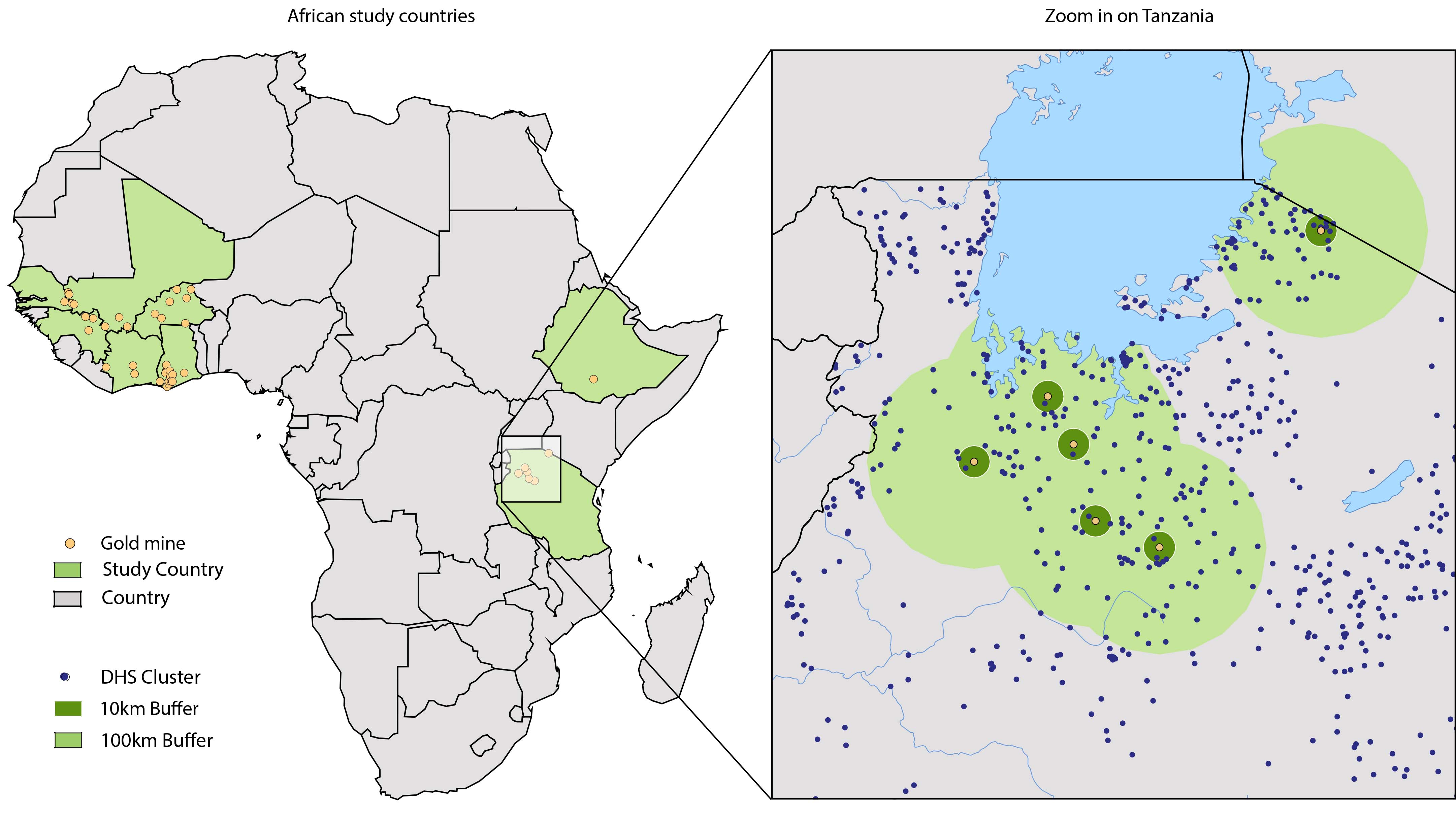 Abstract: Does industrial development affect female empowerment? This paper explores the causal effects of a continent-wide expansion of a modern industry on female empowerment. Identification relies on plausibly exogenous spatial-temporal variation in gold mining in Africa. The establishment of industrial-scale mines induces female empowerment—justification of domestic violence decreases by 19%, women have better access to healthcare (23%), and are 31% more likely to work in services—alongside rapid economic growth. The changes are not limited to subgroups, and are present across women of all ages and migration status. There are no clear changes in attitudes held by men—who are on average less likely to endorse violence—leading to a smaller gender gap in justification of violence. Despite fears that a positive shock to a male dominated sector would reduce women’s bargaining power in the household, no such change is observed. Results survive several robustness checks relating to trends and treatment distances, and are supported by results on community development, including night light and health care access. This paper was previously circulated as “Endogenous Gender Roles: Evidence from Africa’s Gold Mining Industry”.
Press release: University of Gothenburg
Media coverage: Voice of America, Women in Mining, Global Witness
Video summary: Video from the World Bank, November 2014
The Evolution and Persistence of Women’s Roles: Evidence from the Gold Rush (with Sandra Aguilar Gomez)
Journal of Behavioral Economics and Organization, 2023.
 Abstract:Industrial development has ramifications for women’s participation in labor markets and society, in the short and long run. We explore the Gold Rush that took place in the Western United States in the second half of the 19th century. The Gold Rush led to high male-skewed inward migration and created gender-specific job market opportunities, with men entering mining employment and women entering the service sector. In gold mining counties, both men and women worked less in farming. After revealing the baseline patterns, we disentangle the direct effect of gold mining from the mediating effect of the skewed sex ratio, using formal mediation analysis. The skewed sex ratio is driving lower marriage rates for men, and higher female participation in the service sector. The results are consistent with surviving written accounts from the time, suggesting a high premium for traditionally female services. Using census data spanning almost a century, we show that these differences persisted long after the initial conditions of the Gold Rush had passed.
Natural Resource Wealth and Crime: The Role of International Price Shocks and Public Policy with Sebastian Axbard, and Jonas Poulsen
Journal of Environmental Economics and Management (2022)
Abstract: A large literature has highlighted the potential detrimental effects of natural resource wealth on social, economic and political outcomes. We study a previously largely unexplored relationship — the impact of natural resource wealth on criminal activity. Our empirical strategy exploits price fluctuations in 15 internationally traded minerals to study the impact of mineral wealth on local crime levels in South Africa — leveraging detailed crime data from 1,084 police precincts over 10 years. We find that increased mineral wealth leads to a reduction in criminal activity. An exploration of mechanisms suggest that the effect is due to changes in employment opportunities created by the mining industry, affecting the opportunity cost of engaging in criminal activity. Consistent with this we also document that results are driven by property crime and that mines are less likely to close down when prices are high. Our results suggest that downward shifts in international mineral prices can cause surges in crime. To investigate how resilience against such surges can be achieved, we exploit the roll-out of a government employment guarantee program and document that the program reduces the crime response to changes in international mineral prices.
Media coverage: Development Impact, Fight Entropy
First Version: January 2015
Previous Version: Extractive Industries, Price Shocks and Criminality
Extractive Industries and Gender Equality (with Sarah Baum)
Review of Environmental Economics and Policy (2021)
Abstract: What is the impact of extractive industries such as oil, gas, and mining on gender equality? We seek to answer this question. A correlational analysis of cross-country data indicates that resource-dependent countries generally have greater gender inequality, lower education levels for men and women, lower absolute female welfare, and more conservative attitudes toward women. To further explore the relationship between extractive industries and gender equality, we review the empirical literature on extractive industries and their gender-specific effects. The literature review reveals that extractive industries have highly gender-specific effects, with economic impacts such as job creation interacting with gender norms (e.g., gender segregation in labor markets) to affect labor and marriage markets, fertility, and violence. Health, including sexual, reproductive, and infant health, is determined by environmental factors, such as pollution, but the negative effects of these environmental factors can be partly offset by economic opportunities. We argue that program evaluation research is needed to explore ways to strengthen the beneficial effects of extractive industries on gender equality while mitigating their undesirable effects.
Blog post: NRGI
Previous preprint: [Structural Transformation, Extractive Industries and Gender Equality]
Local Industrial Shocks and Infant Mortality
The Economic Journal (2019)
Abstract: Local industrial development has the potential to improve health and well‐being, while also damaging health through exposure to harmful pollution. It is an empirical question which of these effects dominate. Exploiting the quasi‐experimental expansion of African large‐scale gold mining, I find that local infant mortality rates decrease by more than 50% alongside rapid economic growth. The instantaneous reduction is comparable to overall gains in infant survival rates in the study countries from 1970 to today. The results are robust to migration. Local industrial development – despite risk of pollution – may be an effective tool to reduce infant mortality in developing countries.
Media coverage: Voice of America
The Local Socioeconomic Effects of Gold Mining: Evidence from Ghana:
Anja Benshaul-Tolonen, Punam Chuhan-Pole, Andrew Dabalen, Andreas Kotsadam, and Aly Sanoh.
Extractive Industries and Society (2019)
Abstract: Ghana is experiencing its third gold rush, and this paper sheds light on the socioeconomic impacts of this rapid expansion in industrial production. Using a rich dataset consisting of geocoded household data combined with detailed information on gold mining activities, we conduct two types of difference-in-differences estimations that provide complementary evidence. The first is a local-level analysis that identifies an economic footprint area very close to a mine, and the second is a district-level analysis that captures the fiscal channel. The results indicate that men are more likely to benefit from direct employment as miners compared to men further away, and that women in mining communities may more likely gain from indirect employment opportunities and earn cash for work. We also find that infant mortality rates decrease significantly in mining communities, compared to the evolution in communities further away.
African Mining, Gender and Local Employment
Andreas Kotsadam and Anja Tolonen
World Development (2016)
Abstract: It is a contentious issue whether large-scale mining creates local employment, and the sector has been accused of hurting women’s labor supply and economic opportunities. This paper uses the rapid expansion of mining in Sub-Saharan Africa to analyze local structural shifts. We match 109 openings and 84 closings of industrial mines to survey data for 800,000 individuals and exploit the spatial-temporal variation. With mine opening, women living within 20 km of a mine switch from self-employment in agriculture to working in services or they leave the work force. Men switch from agriculture to skilled manual labor. Effects are stronger in years of high world prices. Mining creates local boom-bust economies in Africa, with permanent effects on women’s labor market participation.
Blog post: Let’s Talk Development, World Economic Forum
Press release: University of Gothenburg
Media coverage: Women in Mining Mail (2014)
Long summary:UNRISD Think Piece
Aligning conservation efforts with resource use around protected areas
Abstract: A large number of economically disadvantaged people live around protected areas. Conservation efforts that focus on poverty alleviation, work on the premise that an increase in household wealth decreases use of forest resources. We surveyed 1222 households across four tiger reserves to test the paradigm that an increase in assets leads to reduced forest use and we also assess the effects of other socio-economic factors. We find that increase in assets may reduce Non-timber Forest Product (NTFP) collection, but may not necessarily reduce livestock numbers or use of wood as a cooking fuel. Households that faced more economic setbacks were more likely to state that they wanted more livestock in the future. Education is positively associated with choosing Liquefied Petroleum Gas as a cooking fuel in the future. We find site and resource-specific variation. Fifty percent of all households (range across sites: 6–98) want to collect NTFP while 91% (range: 87–96) want to retain or own more livestock over the next 5–10 years. Understanding current and future resource use will help plan context-specific conservation efforts that are better aligned with reducing specific pressures around protected areas.
Understanding environmental, health and economic activity interactions following transition of ownership in gold mining areas in Tanzania: A case of private to public Sophia Rhee, Elias Charles Nyanza, Madison Condon, Joshua Fisher, Theresia Maduka, and Anja Benshaul-Tolonen. Land Use Policy (2018)
Abstract: Mining is an important source of revenue for many developing countries, however, the social, environmental and economic impacts of mining are often poorly monitored. The recent transition of a gold mine in Western Tanzania—from large-scale gold mine under private, multinational ownership, to medium-scale public and national owned mine with limited life length offers a prime opportunity to understand the implications of changes in ownership and scale on the local economy and community well-being. We conducted 44 semi-structured interviews with community members in four villages adjacent to the mine site. We find that the local economy and public service provision contracted in response to the mine transition and downscaling, with ramifications for food security and healthcare access. Community members also highlighted the lack of information surrounding the mine transformation. This illustrates that considering the post-transition phase of large-scale mines is important for providing long run sustainable livelihood strategies in mining communities.
Mining in Africa: Are Local Communities Better Off?
By Punam Chuhan-Pole, Andrew L. Dabalen, and Bryan Christopher Land, in collaboration with Michael Lewin, Aly Sanoh, Gregory Smith, and Anja Tolonen. International Bank for Reconstruction and Development / The World Bank, 2017.
Research on Sanitation in Developing Countries
Sanitary Products, Absenteeism and Psychosocial Wellbeing: Evidence from a Cluster Randomized Controlled Feasibility Study in Kenya (with Garazi Zulaika, Penelope A. Phillips-Howard et al) [Draft]
Abstract: Does access to sanitary products improve schoolgirls’ well-being? We conduct the first cluster randomized controlled feasibility study to provide different sanitary technologies (sanitary pads or menstrual cup or usual practice) to 644 primary schoolgirls in western Kenya, across 30 schools with 10 schools per treatment arm. Inclusion restrictions were: ages 14-16 years, having experienced at least three menses, and no precluding disabilities. We find that disposable sanitary pads led to a 7.9 percentage point reduction in absenteeism. In addition, using a wider dataset from the 30 schools, we show that (1) boys have similar levels of absences to girls, (2) replication of the results using official school register data fails to detect the treatment effect, illustrating the need for high quality data on school absences. Narrow focus on absences limits our understanding of the effect that sanitary products have on schoolgirls’ welfare: both sanitary pads and menstrual cups improved physical, emotional, social and educational well-being over time. Physical well-being improved in the sanitary pads group by 6.2%, and girls with heavy periods reported 10.1% improvements in emotional well-being from the menstrual cup. The results tapered off toward the end of the study in the sanitary pad group, but remained in the menstrual cup group—highlighting the trade off between strong initial effects of an easy to adopt disposable product compared with delayed and sustained effects of a complex, reusable technology at a significantly lower unit cost.
Blog post coverage: FaiV by David Evans
The cost-benefit and cost-effectiveness of providing menstrual cups and sanitary pads to schoolgirls in rural Kenya
Masih A Babagoli, Anja Benshaul-Tolonen, Garazi Zulaika, Elizabeth Nyothach, Clifford Oduor, David Obor, Linda Mason, Emily Kerubo, Isaac Ngere, Kayla F. Laserson, Rhiannon Tudor Edwards, Penelope A Phillips-Howard.
Women’s Health Reports (2022)
Abstract. Objective: To analyze the relative value of providing menstrual cups and sanitary pads to schoolgirls in rural Kenya. Methods: From a healthcare payer or government program perspective, program costs were calculated for two interventions (provision of menstrual cups or sanitary pads) to girls (14-16 years old) in Kenya for one year. Cost-effectiveness analyses were conducted based on the health effects – in terms of reductions in disability-adjusted life years (DALYs) – and education effects – in terms of reductions in school absenteeism – of both interventions reported in a randomized controlled feasibility study. The health and education benefits were summed and compared to overall program costs. Results: The cost of menstrual cups is estimated at $2,730 per year for 1000 girls, compared to $22,420 for sanitary pads. The benefit of the menstrual cup program (1.4 DALYs averted, valued at $7,000) is higher than that of a sanitary pad program (0.48 DALYs averted, valued at $2400). However, the health effects of both interventions are not statistically significant, likely due to the limited power of the feasibility study. The menstrual cup intervention may be cost-effective in improving health outcomes ($2,000/DALY averted). The sanitary pad intervention has a cost-effectiveness of $280/student-school year in reducing school absenteeism. Meanwhile, combining health and education effects, the sanitary pad intervention is cost-saving with a net benefit of $92,000. Conclusions: The menstrual cup may provide a cost-effective solution for menstrual hygiene management in low-income settings. Provisions of sanitary pads is a cost-saving policy when considering health and education benefits jointly. This study outlines a methodology for future CEA and CBA on menstrual hygiene interventions and highlights several methodological challenges that need to be addressed before other similar analyses can be robustly conducted.
Supplementary Information
Biological, material and socio-cultural constraints to effectivemenstrual hygiene management among secondary schoolstudents in Tanzania
Dani Stoilova, Rebecca Cai, Sandra Aguilar-Gomez, Naomi Heller Batzer, Elias Charles Nyanza, Anja Benshaul-Tolonen
PLOS Global Public Health (2021)
Abstract: Menstrual hygiene management is an important determinant for girls’ educational outcomes. We develop a multifaceted framework for quantifying the relative importance of four distinct mechanisms: material, biological, social and informational constraints and consider four main outcomes: absenteeism, early departure, concentration and participation. To understand the relative importance of menstrual hygiene constraints on educational outcomes, we utilize this framework on survey data from 524 female students enrolled in four co-educational secondary schools in Northern Tanzania. Average age at first period is 14.2 years (standard deviation= 1.1, range 9-19). Information is the least binding constraint: 90-95% of girls report they received information about menstruation and how to manage it. In contrast, the girls suffer from biological constraints: (i) the distribution of menstrual cramp and pain is bifurcated: most girls report very light or very strong pain (rather than moderate pain) with severe educational impacts for girls in the latter group, (ii) irregular cycles (62%) and difficulty predicting the cycle (60%) lead to stress and uncertainty. Socio-cultural constraints are also binding as 84% would feel shame if male peers knew their menstrual status, and 58% fear being teased for their periods. High costs of commercial sanitary pads lead to girls spending between 12-70% of the national poverty line (6,247 TSH per day) on pads during their period. However, there is no statistically significant relationship between material constraints (access to pads) and absenteeism––despite this being the most commonly evaluated policy. In contrast, biological and socio-cultural constraints, and lack of sanitary infrastructure, have significant effects on absenteeism. The results have several implications. First, sanitary pad interventions should consider participation and concentration as main outcomes, in addition to absenteeism. Second, biological constraints (menstrual cramps and pain) and socio-cultural (fear, stigma) and are drivers of menstruation-related absenteeism and participation in the classroom, and need to be evaluated in forthcoming trials. We emphasize the importance of exploring analgesic use and alternative pain-management techniques, menstrual cycle tracking technologies, and social programming to reduce menstrual stigma.
Period teasing, stigma and knowledge: A survey of adolescent boys and girls in Northern Tanzania with Sandra Aguilar-Gomez, Rebecca Cai, Naomi Heller Batzer and Elias Charles Nyanza. PLOS One 2020.
Abstract: Emerging evidence suggests that menstruation-related teasing is a common experience among adolescent girls with ramifications on their school participation, yet empirical evidence on the prevalence and determinants of period teasing in schools remain scarce. Menstrual hygiene research and policies almost exclusively focus on girls and women, leading to a dearth of knowledge of male attitudes. We conducted the first quantitative survey of period teasing in schools in sub-Saharan Africa, focusing on 432 male and 524 female students in four co-educational secondary schools in northern Tanzania. Period teasing is prevalent; 13% of girls have experienced period teasing, and more than 80% fear being teased, especially by male classmates. Girls’ fears are associated with insufficient menstrual hygiene management resources and practices. Girls cope by reducing school attendance, participation, and concentration in the classroom during periods. Boys engage in period teasing because they perceive periods as embarrassing, especially visible markers of periods (odor or stains). Social norms, such as peer behavior and home restrictions on menstruating women, are associated with more teasing. Boys believe it is strongly inappropriate for girls to reveal period status or to discuss periods with males, including male teachers. In contrast, boys are well informed about basic biological facts of menstruation (scoring 60% on a knowledge quiz, not statistically different from the girls) and have received information from school curricula and health workers. Lack of suitable menstrual hygiene practices and restrictive social norms is correlated with period teasing, which hinders gender equality in educational opportunities. Providing narrowly bio-medical focused education about menstruation may not be enough to reduce period teasing in contexts with period stigma.
Measuring Menstruation-related Absenteeism Among Adolescents in Low-Income Countries.
(with Garazi Zulaika, Marni Sommer, and Penelope A. Phillips-Howard ) Published in Palgrave Handbook for Critical Menstrual Studies, 2020.
Abstract: Managing menstruation is an issue for adolescent girls in low-income countries, possibly impacting their dignity, engagement with day-to-day activities, health, and educational engagement. For multiple reasons, girls are considered more vulnerable to missing school than boys, and it is widely reported that many girls miss school during their periods—due to limited economic and physical resources or unsupportive school environments. One research question receiving attention is if providing menstrual hygiene products to schoolgirls reduces absenteeism and increases school enrollment and retainment rates. However, to date, quantitative studies have not yet clearly and consistently demonstrated these effects. We highlight two main methodological issues in existing studies: first, the use of data sources with risk of bias, such as school records, or recall data, is common, without recognition of competing reasons for absence among girls and boys. Second, limiting the focus to absenteeism (and particularly just menstrual related absence) hinders our understanding of the threats that menstruation poses to educational attainment and psychosocial aspects of schoolgirls lives. We recommend the use of mixed-methods, pre-analysis plans, and thoughtful consideration and validation of variables a priori to study implementation. We caution policy makers against over-relying on absenteeism as the sole predictor and over-interpreting results from existing studies that often lack both scope and precision. Additionally, we call for more research on overlooked outcomes, such as concentration in school, learning, self-esteem, and pain management.
African Labor Markets
Firm Culture: Examining the Role of Gender in Job Matching in an Online African Labor Market Belinda Archibong, Francis Annan, Anja Benshaul-Tolonen, Oyebola Okunogbe, Ifeatu Oliobi
Africa has some of the highest rates of unemployment globally, yet there is limited understanding of the sources of labor market frictions due to data scarcity. Using new administrative data on 227,194 applicants and over 2 million matches from the largest online job platform in Nigeria, we study the role of gender in job matching. We find significant differences in the matching behavior of applicants by gender. Women tend to be more qualified for the jobs they apply to than men. Women apply to less jobs and less senior level jobs than men, even when equally qualified for positions.
 Anja Benshaul-Tolonen